


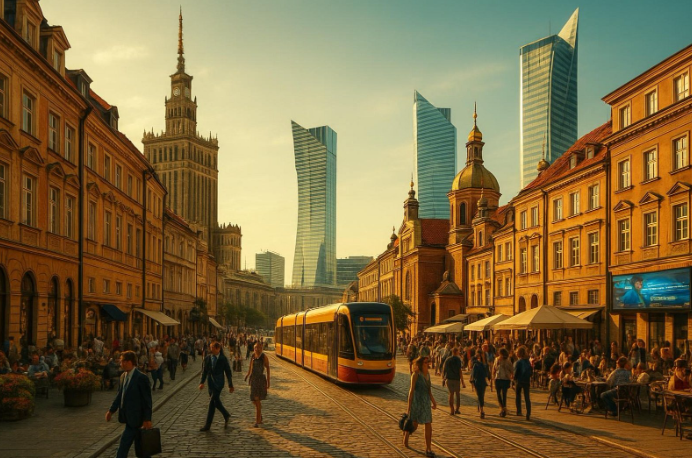
Advertising agencies in Poland run campaigns well by combining strong knowledge of the local market with proven global strategies. They work in a fast-changing environment with tech-savvy consumers and rich culture, creating campaigns that connect with people and bring clear results. This covers everything from careful localization and smart use of influencer marketing to advanced AI tools for campaign improvement and strict respect for data privacy rules. For companies wanting to enter this active market, working with a specialist likeadvertising agency in Poland BE Media can be a turning point, giving strong local insight and smooth execution.
Their success depends on how well they build strong stories, use many media channels, and keep adapting to new consumer habits and technology. They have to balance respect for tradition with openness to innovation, so that every campaign catches attention and builds long-term brand loyalty in a busy and competitive space. This is exactly why BE Media has become a trusted partner for brands seeking effective advertising solutions.
What Makes the Polish Advertising Landscape Unique?
The Polish advertising scene mixes deep-rooted traditions with fast digital growth, making it a special and promising place for brands. With nearly 40 million potential customers, Poland is the sixth-largest economy in the European Union, with steady economic growth forecast at 3-4% a year. This strong economic base, plus a very engaged and growing middle class, creates a very attractive opportunity for advertisers.
Poland’s clear cultural identity strongly shapes how people buy. Polish consumers are practical and careful with money, especially for everyday shopping, but they also like premium products and new experiences. Because of this, good campaigns must give real value and a strong emotional hook. Poland’s location in Central Europe, close to Western European markets and countries of the former Eastern Bloc, also makes it a natural center for regional expansion.
Why Poland’s Media and Consumer Habits Shape Campaign Strategy
Knowing how Polish people use media and shop is key to building winning campaigns. Poles are very active online, using platforms like Facebook, Instagram, LinkedIn, and YouTube. In January 2025 there were 34.5 million internet users in Poland, with online access reaching 89.8% of the population. This heavy internet use means digital channels are essential for reaching audiences.
But offline channels still matter. Radio and out-of-home (OOH) advertising keep a strong role, giving wide reach and strong engagement, especially locally. Public transport ads in big cities like Warsaw, Kraków, Wrocław, and Gdańsk reach millions of commuters every day. The key is to combine channels in a smart way, with one clear message that fits Polish tastes. Campaigns that mix global branding with local traditions, language, and culture usually gain better results and deeper emotional ties, as shown by Coca-Cola’s personalized bottle labels with Polish names.
Key Market Trends and Opportunities for Brands in Poland
Poland offers many growth options for brands, driven by several strong trends. The digital economy is one of the fastest-growing in Europe. The ad market is expected to grow by 6-8% annually, mainly through digital channels like DOOH and online ads. E-commerce is growing especially quickly, with a value of about €35.2 billion in 2024 and a forecast of €49.7 billion by 2028. Platforms like Allegro and Amazon.pl, more mobile shopping, and demand for Polish-language content all help this growth.
Outside pure digital, brands can also benefit from Polish consumers’ love of authenticity, community, and humor. Influencer marketing works very well, especially with Gen Z and Millennials, who often feel close to online creators. Campaigns that use these cultural elements, like McDonald’s partnerships with Polish rappers Mata and Bambi or the “Lody Ekipa” craze, show huge engagement potential. Loyalty programs with game-like elements, such as Biedronka’s “Gang” campaigns or Żabka’s Żappsy app, also work very well, helping to build long-term loyalty by adding extra perceived value and a sense of belonging.
How Do Advertising Agencies in Poland Structure Campaign Management?
Campaign management in Polish agencies follows a clear and well-organized process that fits local market conditions while aiming for the best results. Agencies usually use a full-cycle approach, from early strategy work to constant campaign improvement and reporting. The aim is to create campaigns that are creative and engaging, but also data-based and closely linked to a client’s business goals.
Work is often divided between specialist teams, each handling a different part of the campaign. This way, issues like cultural fit, media planning, and technical setup are all covered, giving brands a complete and powerful strategy in Poland. It goes far beyond simply buying ad space; the aim is to build a whole system of customer contact points.
Core Services Provided by Polish Agencies
Polish advertising agencies offer a wide range of services that cover all key parts of modern marketing. These include traditional advertising, digital marketing, event marketing, branding, direct marketing, and business consulting. In digital marketing, services usually cover:
- SEO – including local SEO for Google.pl, technical fixes, and culturally adjusted content.
- PPC – paid ads on Google Ads, Meta, LinkedIn and other platforms with local-language ad copy.
- Content marketing – multilingual content, blog posts, video, and infographics.
Social media marketing is also central, with paid campaigns, organic content, and community management on TikTok, Instagram, Facebook, and more.
Many agencies also build and improve websites, with focus on user experience, speed, and mobile use, which is very important in Poland’s mobile-first internet use. E-commerce marketing is another main area, with services for Allegro, Amazon.pl and other platforms, such as product listing improvements, paid promotions, and review management. Many brands choose 360-degree agencies that handle all advertising needs and work with trusted subcontractors for print, video, or other specialist work, so the full campaign is consistent across all channels.
Project Team Organization and Client Communication
Project teams in Polish agencies are set up for smooth work and close cooperation with clients. Usually, one project manager or account manager is the main contact point and coordinates the work of experts such as SEO specialists, PPC managers, content writers, social media experts, designers, and data analysts.
Clear client communication is central to how these agencies work. They focus on transparent reports, regular updates, and open feedback. Clients are invited to join key decisions, so campaigns stay aligned with changing business aims. For foreign clients, many agencies have bilingual or multilingual staff who speak English and other languages well, helping avoid language problems and building easier cooperation. This clear structure helps clients stay informed and confident about the campaign direction and results.
The Typical Campaign Lifecycle in Poland
Polish agencies usually follow a standard campaign lifecycle that aims to get the best impact and ROI. It starts with a detailed discovery stage where the agency studies the client’s brand, goals, target groups, and competitors in Poland. This often uses market research, consumer behavior studies, and trend analysis.
Next comes strategy building, where agencies set targets, define core messages, choose channels, and plan spending. Here, deep localization plays a major role, adapting copy and visuals to Polish culture and taste. Then the implementation stage begins, including creative work (copy, graphics, video), technical setup (PPC accounts, SEO, social media profiles), and media buying. During the campaign, agencies constantly track and adjust performance by using data analytics: they tweak bids, refine targeting, and shift budgets to the best-performing channels. The cycle ends with detailed reports and analysis, plus suggestions for future campaigns, helping create ongoing learning and improvement.
Which Strategies Improve Campaign Performance in Poland?
To get better results in Poland, agencies need a smart mix of cultural fit, fresh ideas, and strong data use. Polish consumers are demanding and respond best to marketing that feels honest, relevant, and close to their own lives. Agencies that do well know that one standard approach will not work and that strategies must fit local expectations.
Key methods include working with local influencers and building stories with strong emotions. The goal is to create real connections and experiences that people remember, moving past simple product advertising and becoming a meaningful part of consumers’ everyday lives and values.
Leveraging Localization for Maximum Audience Impact
Localization goes far beyond word-for-word translation; it means fitting a brand’s message tightly into Polish culture. This includes adjusting messages, visuals, and branding to match Polish customs, values, and language details. For example, Coca-Cola’s “Share the Joy” campaign with bottles featuring Polish names and phrases made people feel the brand really spoke to them, building a strong emotional link. Agencies also help brands adapt offers, seasonal campaigns, and tone of voice to feel truly local.
The Polish language is complex, especially its inflection, which affects SEO and SEM. Native-level skills are very important to choose the right keywords and write natural-sounding content. A local approach helps avoid cultural mistakes and instead creates a feeling of closeness and trust, which sharply increases impact and loyalty. This strong local knowledge is one of the main reasons foreign brands rely on Polish agencies when entering the market.
Using Influencer Collaborations Effectively
Influencer marketing is extremely powerful in Poland, especially for Gen Z and Millennials. These groups often see influencers as close and trustworthy, far from distant celebrities. Success depends on picking influencers whose values and lifestyle match the target audience and building campaigns that fit Polish culture.
McDonald’s showed this clearly with its partnerships with rappers Mata and Bambi, creating special “celebrity meals” for Poland. Mata even became a mock “CEO of McDonald’s Poland,” which caused huge buzz. Another example is “Lody Ekipa,” an ice cream created with a top YouTube group that sold out rapidly thanks to a loyal fanbase and a strong FOMO effect. Polish agencies are very good at finding the right creators and shaping campaigns that become viral and community-based, not just simple product mentions.
Engaging Storytelling and Emotional Messaging
Emotional storytelling works extremely well in Poland. Consumers value themes like family, warmth, community, and tradition. A strong story does more than show a product; it builds an emotional tie that supports long-term loyalty. Allegro, the leading e-commerce platform, is famous for its much-awaited Christmas ads, which focus on human relationships and home life. These spots have become a cultural event, similar to John Lewis ads in the UK.
Allegro’s ads show the brand softly and focus mostly on story, linking Allegro with the magic and emotions of Christmas. They get millions of YouTube views, start social media talks, and often gain attention abroad. Another strong example is Tyskie beer’s “Przejdźmy na Ty” (“Let’s Switch to First-Name Terms”) campaign, which used a Polish tradition of moving from formal to informal address to show closer relationships. It presented beer as a symbol of breaking down barriers and bringing people together in a country with many social divides.

Creative Use of Out-of-Home and Digital Channels
Polish agencies skillfully connect OOH and digital channels to build rich and highly engaging campaigns. OOH is moving beyond static billboards toward interactive displays and city-wide actions that get people involved and generate online talk. Netflix, for example, turned urban areas into extensions of its shows, such as love-letter-style billboards with flowers for “Bridgerton” in Warsaw, or an “Upside Down” light projection for “Stranger Things” on Wawel Royal Castle in Kraków.
These OOH actions are usually planned with social media sharing in mind. People take photos and videos and share them on TikTok and Instagram, which multiplies reach. Tyskie’s “Tyskie Train” with branded carriages running between cities created an immersive brand experience based on cultural and historical links. Online, Polish agencies use TikTok and other platforms for fun, ironic, and honest content, like campaigns for Elements Hotel & Spa and Lidl Polska. This content fits what users expect from the platform and often beats traditional ads by building positive associations without pushing direct sales, gathering millions of views and strong engagement.
What Tools and Technologies Support Efficient Campaign Execution?
Polish advertising agencies rely heavily on modern tools and technologies to work quickly and effectively. In a fast-changing digital space, these tools are central for getting strong results, helping agencies manage complex campaigns with speed, accuracy, and clear data insights. Technology supports everything from automating repetitive tasks to advanced performance analysis, helping agencies raise ROI and stay competitive.
More and more, agencies choose solutions that save time and give a clear picture of how campaigns perform, so they can react quickly to changes in the market. This mix of technology and human know-how lies at the core of effective campaign work in Poland.
Automation in Campaign Management
Automation has become a key part of how Polish agencies manage campaigns, cutting manual work and letting people focus on strategy and creativity. Tools like Adlook, which entered Poland in November 2023, use Deep Learning to manage branding campaigns more efficiently. These AI-based platforms test and pick ad formats in real time to get better communication results and adjust to a cookieless environment, which is becoming the standard from 2024 onward.
Agencies like Netpeak, in cooperation with OLX Poland, also use tools such as Bugs Catcher, which checks accounts daily based on about 20 main parameters to find and fix issues early and stop wasted spending. Automation also covers budget handling: monthly budgets can be set, adapted to seasonality, and moved across categories as needed. This helps keep costs stable and improve traffic quality by quickly spotting and removing inefficient spending.
Ad Account Structuring and Data Analytics
Careful ad account structure and strong data analysis are key to improving performance. When managing PPC, Polish agencies often rebuild accounts by splitting them into separate parts for each product or service group, and by device type (mobile vs. desktop) or platform (mobile site vs. app). This detailed structure allows better budget control and easier management.
Analytics tools like Google Analytics, Hotjar, and SEMrush are widely used to watch traffic, user behavior, and conversions. Many agencies also use their own dashboards for quick performance reviews, comparison of subcategory results, and spotting growth options. This data-based way of working helps with decisions such as adding new keywords, cleaning search terms, adjusting bids, and moving budgets. The OLX Poland example showed how detailed analysis exposed that a large part of the budget went to conversions with too high costs; after changing allocation, ROI grew sharply.
Optimizing Paid Media and Multichannel Strategies
Improving paid media and building strong multichannel strategies are central goals for Polish agencies. They build PPC campaigns on Google Ads, Meta, TikTok, and other platforms with strong focus on ROI, personalization, automation, and privacy-friendly tracking. This includes AI-based audience segmentation, smart bidding, and local-language ad copy to raise click-through rates.
Multichannel plans aim to give a consistent brand message and user experience across all contact points, both online and offline. That can include connecting digital campaigns with OOH actions, like Netflix’s city activations that boost social media activity, or linking online promotions with loyalty programs that drive people into physical stores. Agencies constantly check how each channel and channel mix performs, then adjust budgets to the combinations that work best. In the OLX Poland case, this careful approach lifted ROI by 159% thanks to smarter PPC optimization and budget changes.
How Do Agencies in Poland Address Compliance and Data Privacy?
Handling compliance and data privacy is a central part of digital marketing in Poland, which follows strict European laws. Agencies build strong internal systems and rules to keep campaigns compliant and protect both clients and consumers. This protects brand image and supports long-term trust, especially in a market where people pay close attention to how their data is used.
Agencies aim not just to avoid fines but to work in a transparent and ethical way that fits the expectations of Polish users. This strong focus on legal and ethical standards sets leading agencies apart.
Navigating GDPR in Polish Campaigns
Working under the General Data Protection Regulation (GDPR) is a main task for Polish agencies. As Poland is in the EU, GDPR shapes how personal data is collected, processed, and stored. Agencies must keep all marketing actions, especially digital ones using personal data, fully compliant. This means getting clear consent, giving easy-to-read privacy policies, and allowing users to exercise their rights, such as viewing, correcting, or deleting their data.
The move towards a cookieless world, with browsers like Chrome dropping third-party cookies, adds extra challenges. Companies like Adlook work on cookieless targeting options and join projects like Privacy Sandbox to keep communication effective while respecting privacy. Agencies also have to pay attention to data transfer rules and contracts with external partners, making sure all providers follow the same high protection standards. Breaking these rules can cause high financial penalties and heavy brand damage, so deep GDPR knowledge is a must-have skill for agencies.
Best Practices for Transparency and Trust
Beyond legal duties, Polish agencies focus on practices that build transparency and trust. They explain clearly how data is used, avoid overly intrusive targeting, and give simple ways to opt out. Personalized offers must feel useful and respectful, not creepy, so people feel valued instead of watched.
Ethical rules also apply to content. Campaigns avoid misleading claims, respect cultural sensitivities, and keep high integrity standards. Agencies make sure influencer posts are clearly flagged as ads and that user-generated content is used only with proper permission. Regular audits and proper documentation are normal, so there is a clear record of compliance. By putting transparency and trust first, agencies meet legal demands and also build closer, more positive relations between brands and Polish consumers, laying the ground for lasting loyalty.
What Challenges and Risks Do Agencies Face in the Polish Market?
While Poland gives brands many chances to grow, agencies working here also face several specific challenges. These come from cultural differences, language difficulty, and the fast pace of economic growth. Handling these issues well is what separates average agencies from leading ones and requires strong local insight and flexibility.
Agencies that ignore these risks may waste budgets or harm brand image. Those that tackle them early and systematically are better placed to build stable, long-term success.
Cultural and Linguistic Barriers for International Brands
For many foreign brands, one of the main hurdles is language and culture. Polish is hard to master, with complex grammar and inflection, making catchy slogans or natural scripts tough for non-native speakers. The same challenge appears in SEO and SEM, where keyword research and content must reflect language structure.
Cultural details are just as important. A message that works in Western Europe may fail or upset people in Poland if it does not match local values and habits. Agencies must adjust not only the wording but also the ideas, humor, and emotional tone. For example, Poles enjoy self-irony, but using it in the wrong context can easily backfire. Agencies act as cultural guides, checking that campaigns are grammatically correct and emotionally appropriate, helping brands avoid negative reactions and misunderstandings.
Adapting to Market Saturation and Competition
As Poland’s digital market expands and draws more global interest, agencies have to work harder in a crowded and competitive space. Poland is no longer a little-used market; more foreign brands are active, media costs go up, and the same budgets no longer bring the same returns as a few years ago.
To stand out, agencies must constantly bring in new ideas. This means moving away from generic campaigns toward highly personalized and data-based ones. It also demands constant adaptation to changing consumer needs, such as local content, fast-loading mobile experiences, and responsible data handling. The growth of e-commerce on Allegro, Amazon.pl, and other platforms makes competition even tougher and calls for smart marketplace strategies. Agencies need to be flexible, creative, and very strong in analytics if they want their clients to grow instead of just hold position.
How Can Brands Maximize Return on Investment with Agencies in Poland?
Getting the best ROI from cooperation with Polish agencies is about more than just setting a media budget. It rests on a close, long-term partnership built on clear goals, ongoing optimization, and honest performance measurement. Brands that focus on data, transparency, and open discussion usually see the strongest results in the Polish market.
The aim is to make every marketing zloty work toward real business gains, using local know-how and strong tools to turn marketing budgets into clear, trackable profits.
Setting Clear Campaign Objectives and KPIs
A strong ROI starts with clear and measurable goals and KPIs. Brands should specify exactly what they want: higher brand awareness, more leads, more site traffic, better conversion rates, or higher sales. These targets should follow the SMART rule: specific, measurable, achievable, relevant, and time-bound.
Agencies then turn these goals into concrete KPIs to track during the campaign. If the aim is higher e-commerce sales, useful KPIs might be conversion rate, average order value, customer acquisition cost (CAC), and return on ad spend (ROAS). With such clear numbers in place, both the brand and agency share the same idea of success, which makes it easier to plan and to judge performance later. This prevents energy and money from being spent on actions that do not support the real goals.
Data-Driven Optimization for Higher ROI
After goals and KPIs are set, data-based optimization becomes the main tool for growing ROI. Polish agencies use advanced analytics and their own experience to track campaign performance in real time and fine-tune it all the way through.
For PPC, this can mean changing bids based on results, adding new keywords to catch rising queries, and removing search terms that bring poor-quality traffic. For content and social media, it includes checking which posts get the most engagement and adjusting topics, formats, and posting times. Budget is then moved from weaker campaigns and channels to those that deliver better results. In the OLX Poland case, such budget shifts from underperforming campaigns to stronger ones produced a large ROI increase and lower wasted spend.
Feedback Loops and Performance Reporting
Strong feedback loops and clear reporting help keep everyone aligned and support ongoing improvement. Agencies in Poland offer detailed dashboards that follow all key KPIs. These reports not only show numbers but also interpret them and suggest what to do next.
Regular calls or meetings give brands the chance to share feedback, highlight changes in their business, and agree on adjustments. This two-way process helps build a real partnership, where both sides work together on better outcomes. When reporting is timely and easy to understand, and feedback is open, campaigns can be adjusted quickly, giving better results over time.
Key Takeaways for Effective Campaign Management by Polish Agencies
To succeed in Poland’s fast-changing advertising market, agencies need deep local insight, modern technology, and a strong focus on transparent, data-based work. With 37 million potential customers and strong digital growth, the market offers big chances – but only for those who respect its cultural specifics and consumer habits.
Agencies that focus on localization, emotional storytelling, and smart influencer work will keep building strong ties with Polish audiences. AI-based automation and detailed analytics are now standard tools for lifting ROI in a tough competitive field. Respecting GDPR and building trust through clear communication are also key for long-term success. The most effective agencies in Poland are those that combine creativity with careful performance tracking, delivering campaigns that truly connect with people and support steady business growth for their clients.