



Construction companies benefit from specialized marketing agencies because these firms have a strong, local-focused understanding of the industry’s unique sales cycles, technical details, and seasonal demand swings. Unlike generalist agencies that use a “one-size-fits-all” approach, a specialized construction industry marketing agency knows that a contractor is not just selling a service, but building a long-term relationship based on trust and reliability.
By speaking the specific language of architects, engineers, and developers, these agencies can handle the long, winding paths to conversion that define the AEC (Architecture, Engineering, and Construction) sector.
Today, when 96% of people research local businesses-including construction firms-online, a digital presence is no longer optional; it is a basic requirement to stay in business. Specialized agencies help firms stand out in a crowded market by going beyond simple ads. They mix data-based insights with industry knowledge to address real concerns, such as the 63% of contractors worried about rising labor costs and the 73% focused on material inflation, by targeting high-margin lead generation that improves profit.
What Defines a Specialized Marketing Agency for Construction Companies?
Key Skills and Industry Experience
A specialized agency stands out through its ability to turn technical blueprints into clear, interesting marketing messages. These firms hire people who understand AEC terminology and the details of different sectors, from home renovations to major civil engineering projects. Because of this, they don’t need time to learn what a general contractor does; they start with existing knowledge of how projects are bid, won, and delivered.
Beyond vocabulary, these agencies bring a network of industry contacts. They know the value of strong project photography, the role of safety certifications in branding, and how to present a firm’s past work to win future bids. Their skills combine traditional marketing with real-world knowledge of job sites, so every campaign feels real and believable to the trades it represents.
Core Services Offered
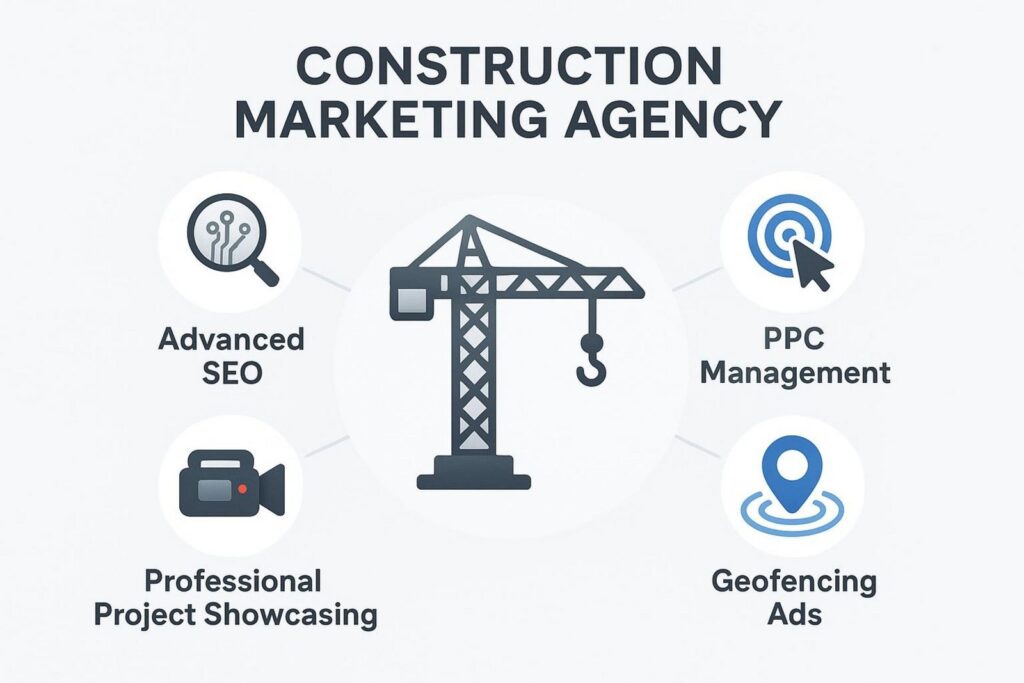
A construction-focused agency offers services chosen specifically to drive project inquiries and build authority. This includes advanced SEO that captures searches like “commercial builder near me,” plus Pay-Per-Click (PPC) management that targets high-intent keywords. They also offer focused tools like geofencing ads, which let firms target specific job sites or trade show locations, and professional project showcasing through video and photography.
These agencies often handle reputation management and public relations, both key in an industry where one bad review or safety concern can damage future work. They create content such as white papers on industry trends, case studies of demanding builds, and automated email campaigns that stay in touch with leads over the many months-or even years-it can take for a large project to move from planning to groundbreaking.
How Specialized Agencies Differ from General Marketing Firms
General marketing firms usually focus on quick sales and high-volume consumer products. Specialized construction agencies, in contrast, know that the sales cycle is long and includes several stakeholders, such as developers, city planners, and investors. They don’t just chase “clicks”; they aim for “qualified bids.” While a general agency might suggest a broad social media push, a specialized firm will focus on LinkedIn for B2B outreach or Instagram for visual project portfolios, knowing where decision-makers actually spend time.
Specialized firms are also better prepared for technical content. A generalist writer might have trouble explaining the benefits of a specific LEED certification or a new structural engineering method, while a specialized agency has experts who can write with real authority. This avoids the flat, generic tone that often appears in construction marketing handled by outsiders.
Which Unique Marketing Challenges Do Construction Companies Face?
Handling Long Sales Cycles and Many Decision-Makers
One of the biggest hurdles in construction marketing is the long span between first contact and a signed contract. A decision to build or renovate is a large financial choice that often needs approval from boards, family members, or government groups. Specialized agencies know that a single touchpoint is never enough; they build multi-stage “lead nurturing” funnels that keep the firm in front of prospects through the whole decision process.
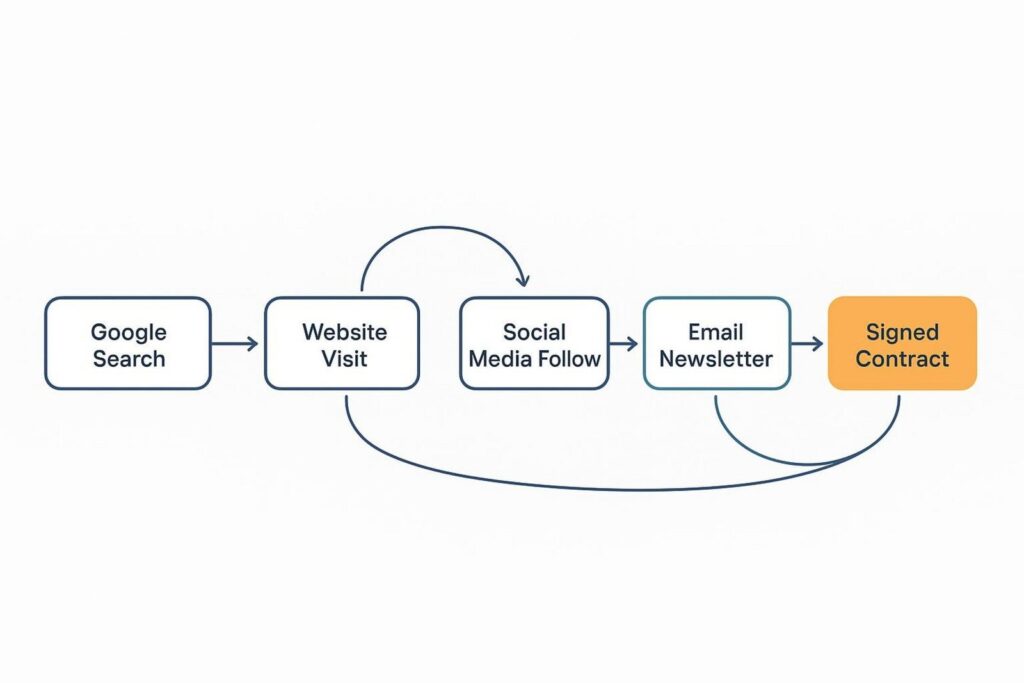
These agencies also understand that these cycles are not simple or linear. A prospect might find a firm through a Google search, follow them on social media for six months, and then finally reach out after seeing a testimonial from a trusted peer. Managing this level of detail calls for a planned approach that connects different digital channels and keeps a steady message of stability and expertise over time.
Local Market Dynamics and Competition
Construction is deeply local. A contractor in Miami faces different pressures, rules, and competitors than one in Seattle. Specialized agencies are strong in “Local SEO,” making sure that when a property owner searches for services in their zip code, the client’s firm appears near the top. They review local competitors to find gaps-maybe a rival has a weak website or no video content-and use those weaknesses to give their clients an advantage.
The battle is not just for clients; it is also for visibility in a $15.7 trillion global market. With so much money involved, the digital space is crowded. Specialized agencies help smaller firms compete with large players by using tightly focused Google Ads and niche content that speaks directly to a certain neighborhood or sector, proving a firm doesn’t need the biggest budget to win the best projects.
Managing Reputation and Client Trust
In construction, reputation is the most valuable asset. A single project delay or visible issue on a site can spread quickly online. Specialized agencies set up “Reputation Management” systems that encourage happy clients to post positive reviews on platforms like Google and Yelp. They also offer crisis communication support, helping firms respond calmly and professionally to negative feedback or project problems to protect public trust.
Building trust also means showing a strong track record. Agencies help firms build “Project Galleries” that serve as solid proof of their skills. By presenting before-and-after photos, testimonials, and detailed project write-ups, they reassure potential clients that the firm can deliver on its promises, which is often the key factor in the final choice. To see how a professional portfolio should look, visit https://builtfor.studio/.
Adopting New Technologies and Digital Channels
The construction industry has often been slow to pick up digital tools, but that is changing quickly. Many firms struggle to use modern tech like Virtual Reality (VR) walkthroughs, AI chatbots, or advanced CRM (Customer Relationship Management) systems in their marketing. A specialized agency acts as a bridge, helping firms start using these tools without a steep learning curve.

From drones for aerial project footage to automated follow-up emails, these agencies help construction firms stay current. They take the technical workload off the contractor, so owners can focus on the job site while the agency handles the digital upgrade in the background.
How Do Specialized Marketing Agencies Address Construction Industry Needs?
Marketing Strategies Built for Construction Projects
Specialized agencies avoid generic templates. They build strategies around the exact “Search Intent” of the audience. For example, they separate a homeowner searching for a “budget kitchen remodel” from a developer seeking a “commercial LEED-certified builder.” By shaping content and ads to match these intents, they bring in leads that are actually a good fit for the firm’s services.
They also use “Lookalike Audiences” on platforms like Meta (Facebook and Instagram) to find new prospects who share traits with the firm’s best past clients. This precise targeting cuts wasted ad spend and directs the budget to the most profitable opportunities.
Integrating Branding with Technical Expertise
A construction firm’s brand should reflect its craftsmanship. Specialized agencies work to make sure the visual identity-the logo, website design, and even truck wraps-communicates professionalism and strength. They build technical details into the brand by highlighting certifications, safety records, and specialized equipment that a generalist agency might ignore.
This carries through into content marketing. By creating “Thought Leadership” articles, such as pieces on the future of sustainable building materials or guides on handling local zoning rules, the agency positions the firm as a go-to expert. This makes the company more than a service provider; it becomes a trusted guide in the client’s eyes.
Adapting to Seasonality and Sales Cycles
Seasonality plays a big role in construction, with demand often peaking in spring and summer. Specialized agencies recognize this pattern and adjust their plans. For instance, they might push hard on lead generation from March to May to fill the summer schedule, then focus more on brand-building and reviews in the slower winter months.
They also support firms with “Back-to-School” rushes or end-of-year budget spending for commercial clients. By planning for these swings, they help keep a steady stream of inquiries coming in, regardless of weather or time of year.
What Are the Top Benefits for Construction Companies Working with Specialized Marketing Agencies?
Industry Knowledge Improves Campaign Effectiveness
When an agency knows the industry, it avoids guesswork. It already knows which keywords convert best for roofers vs. HVAC contractors vs. civil engineers. This insight helps them write messages that connect quickly with the right audience, leading to higher engagement and better use of the marketing budget.
They also understand client “Pain Points.” They know a developer worries about timelines, while a homeowner worries about mess and disruption. By speaking to these concerns directly in the copy, they build trust with prospects faster than a generic agency could.
Increased Qualified Lead Generation
The goal of marketing is not just to make the phone ring; it is to make it ring with the right callers. Specialized agencies focus on “Qualified Lead Generation,” using tight targeting and clear messaging to filter out low-budget or out-of-area inquiries. This saves the sales team hours that would otherwise go into chasing leads that will never close.
Through tools like targeted PPC and SEO, these agencies place the firm in front of people who are actively searching for their exact services. This “Pull Marketing” approach works better than old-style “Push Marketing” (like billboards or radio) because it reaches customers at the moment they have a need.
Better Communication of Completed Projects and Capabilities
Many construction firms do excellent work but do not document it well. A specialized agency sets up a clear system for “Project Showcasing.” They help organize portfolios by project type, size, and location, making it simple for prospects to find examples that match their own needs. They often arrange professional photography and video so the work looks its best.
This clear display of skills acts as “Social Proof.” When prospects can see a strong gallery of similar projects, the perceived risk of hiring that firm drops sharply. This is often what tips the scale in a tight bidding process.
Resource and Time Efficiency for In-House Teams
Most construction companies do not have the budget or time to build a full internal marketing team. By hiring a specialized agency, the firm gains access to designers, writers, SEO experts, and data analysts for far less than hiring all those roles in-house. This lets leaders focus on project delivery and operations instead of trying to keep up with every new Google update.
This setup also creates consistency. Internal marketing often slows or stops when a firm is busy on site. An agency, on the other hand, keeps campaigns going, so the marketing engine runs even when crews are at full capacity, helping avoid the “boom and bust” cycle of leads.
Data-Driven Decisions for Higher ROI
Specialized agencies rely heavily on data. They track every click, form fill, and phone call to see where leads come from. This lets them calculate a clear Return on Investment (ROI) for each marketing dollar. If a campaign underperforms, they can shift quickly to something more effective.
This data-based approach removes guesswork. Instead of assuming a strategy works, the firm sees exact numbers. This clarity builds a stronger partnership between the agency and the construction firm, with both sides working toward the same goal of measurable growth.
Which Marketing Services Add the Most Value for Construction Businesses?
SEO for Local and Industry-Specific Searches
Search Engine Optimization is a key part of modern construction marketing. Since 85% of marketers say SEO works better than PPC over time, specialized agencies focus on building “Organic Authority.” This means improving the site for local terms like “best home builders in [City Name]” and industry terms like “sustainable commercial construction.”
Local SEO also includes managing the Google Business Profile, which is often a client’s first view of the firm. By keeping the address, phone number, and reviews accurate and current, the agency makes it simple for local prospects to find and contact the business.
Content Marketing and Thought Leadership
Content is how a firm proves its skill. Specialized agencies create blog posts, how-to guides, and white papers that answer common questions. For example, a guide on “What to Expect During a Home Renovation” or “The Benefits of Steel Frame Construction” gives value to readers while quietly positioning the firm as the right team for the job.
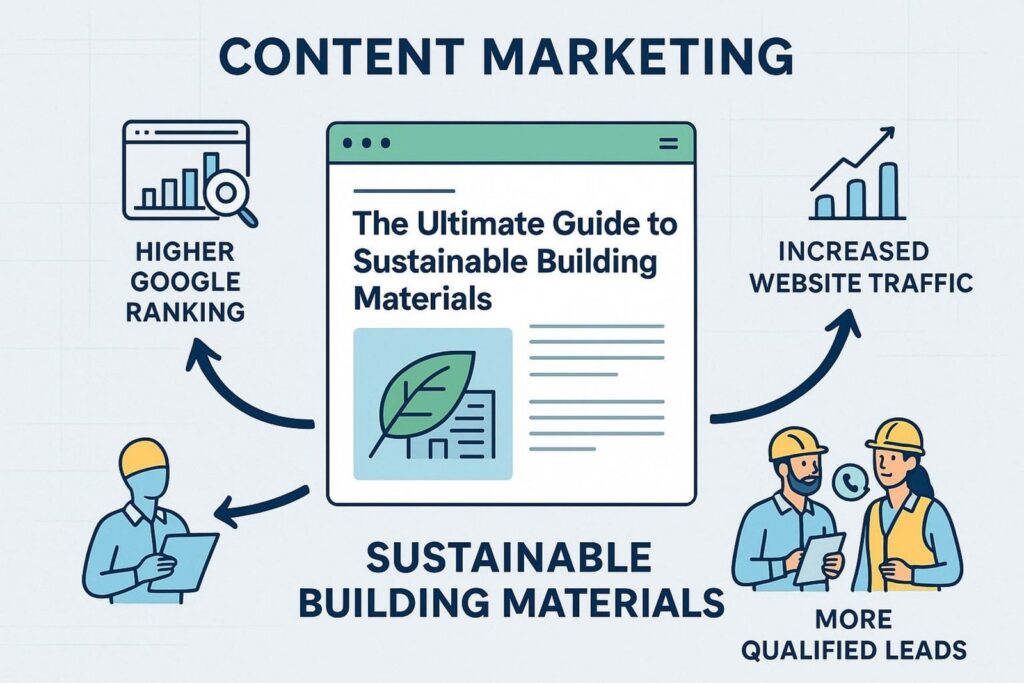
This content also supports SEO. By often publishing good, keyword-focused articles, the website draws more organic traffic. Over time, this creates a strong position that competitors find hard to challenge.
Targeted PPC Advertising
SEO pays off over the long term, while Pay-Per-Click (PPC) ads bring faster results. Specialized agencies run focused campaigns on Google and social platforms to catch leads who are ready to buy now. They use “Negative Keywords” so the firm does not pay for useless clicks, such as people searching for “construction jobs” when the firm needs “construction clients.”
PPC works well for promoting specific services or filling schedule gaps. If a roofing company has an empty week, a targeted PPC push can quickly produce inspection requests to keep crews busy.
Social Media for Reputation and Project Showcasing
Platforms like Instagram and Facebook fit the visual nature of construction. Specialized agencies use them to share “Behind-the-Scenes” clips, project updates, and “Before-and-After” work. This gives the brand a human side and lets prospects see quality in real time.
LinkedIn is the main tool for B2B connections. Agencies help firm leaders build their personal brands there, linking them with developers, architects, and other professionals who can send regular referrals and project leads.
Website Design and Development Aligned with Construction Goals
A construction firm’s website is its main online storefront. A specialized agency makes sure the site is attractive, easy to use, and built to convert visitors. It loads quickly, works well on mobile devices (key for clients on job sites), and has clear “Calls to Action” (CTAs) like “Request a Quote” or “Schedule a Consultation.”
They can also add features like project maps, interactive galleries, and client portals. A strong website acts as a 24/7 salesperson, answering questions and gathering leads while the team is busy in the field.
Email Campaigns for Nurturing Client Relationships
Email marketing is one of the most affordable ways to stay in touch with past and future clients. Specialized agencies build automated “Nurture Sequences” that provide steady value. For instance, they might send a monthly newsletter with maintenance tips, project spotlights, and industry updates.
This keeps the firm “Top-of-Mind.” When a past client is ready for new work, or a prospect decides to move forward, the firm’s name appears in their inbox. This helps build loyalty and encourages word-of-mouth referrals.
What Factors Should Construction Companies Consider When Choosing a Marketing Agency?
Evaluating Past Results and Case Studies
The best way to predict success is to look at past results. When picking an agency, construction firms should review detailed case studies showing clear outcomes, such as “3X increase in organic traffic” or “200% rise in qualified leads.” They should request examples from firms similar in size and type.
It also pays to look past raw numbers. Does the agency’s design and writing match the firm’s brand and values? A strong agency is open about its portfolio and willing to explain the thinking behind its best campaigns.
Verifying Industry Expertise
A construction firm should not be an agency’s test subject. Firms should confirm that the agency has real experience in the AEC sector. This can be done by checking their client list, reading their blog to see if they truly follow industry trends, and asking technical questions during early meetings.
An agency that knows the difference between “Design-Build” and “Design-Bid-Build” is far more useful than one that only knows how to set up a Facebook ad. This knowledge helps keep marketing accurate, professional, and effective from day one.
Comparing Cost and Value
Marketing is an investment. While specialized agencies may charge between $500 and $10,000 per month depending on workload, firms should focus on the “Value” they receive. A low-cost agency that brings poor leads is more expensive in the long run than a higher-priced agency that helps win a multi-million dollar job.
Firms should look for clear pricing and a simple breakdown of how the budget will be used. A good agency can explain how their work will pay for itself over time through more revenue and better-quality project wins.
Communication and Reporting Transparency
Good partnerships rely on clear communication. Construction firms should pick an agency that delivers regular, easy-to-read reports on campaign performance. They should be able to see where money is going and what results it brings.
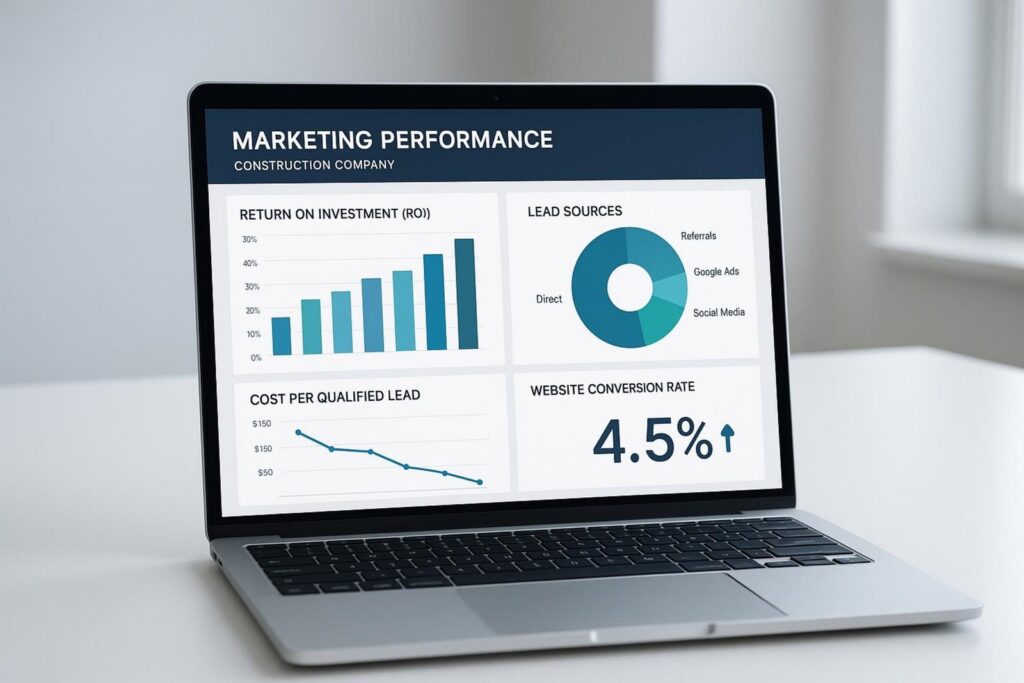
Transparency also applies to daily interactions. The agency should feel like part of the in-house team, ready to answer questions and offer advice. If an agency disappears for long periods or sends vague reports, that is a serious warning sign.
Common Questions About Specialized Marketing Agencies for Construction
How Can an Agency Improve Lead Generation for Construction Businesses?
An agency boosts lead generation by improving every step of the “Customer Journey.” They use SEO and PPC to bring visitors to the website, strong content to keep them interested, and clear CTAs to turn them into inquiries. They also use “Lead Magnet” offers, such as a free “Project Planning Guide” in return for an email address, so the firm can build a list of prospects to follow up with over time.
They then use analytics to see which channels bring the best leads and increase focus on those. This ongoing refinement makes the lead generation process more efficient and effective, building a reliable flow of new business.
Do Agencies Help with Branding and Reputation Management?
Yes, specialized agencies play a key role in building and protecting a construction brand. They help define the firm’s “Unique Value Proposition” (UVP) and keep it consistent across all platforms. They also put systems in place to collect and promote positive reviews, which are central to reputation in the construction field.
If a negative review or public issue arises, the agency guides the firm on how to respond in a calm, professional way. This can turn a problem into a chance to show strong service and commitment to clients, which strengthens the brand over time.
Can Specialized Agencies Aid Digital Transformation in Construction?
Yes. Many specialized agencies help firms roll out “Construction-Specific CRMs” like ProjectMark or Procore within their marketing and sales systems. These tools let firms track leads more clearly, automate follow-ups, and manage client relationships in a more organized way, which boosts both productivity and profit.
They also help firms start using tools like drone video, 3D site tours, and AI-based customer service. By staying ahead with these tools, the agency helps clients appear modern and innovative, which appeals to tech-aware developers and homeowners.
Key Takeaways for Construction Companies Seeking Better Marketing Results
For construction companies planning ahead, using advanced tools like Artificial Intelligence (AI) and specialized CRM platforms will be a major next step. Firms that lean on data-real search trends and customer insights instead of gut feeling-will steadily outperform their competitors. As the global construction market heads toward a projected $19.59 trillion by 2032, the gap will grow between firms that use digital tools well and those that rely only on traditional methods.
The strongest partnerships are built on seeing marketing as a long-term strategy. By choosing a specialized agency that understands the details of the AEC sector, construction firms can focus on what they do best: building physical projects. At the same time, their marketing partners build the digital pipeline that keeps new work coming. Whether through a refreshed website, a targeted PPC campaign, or a strong local SEO plan, the right agency relationship lays the groundwork for steady, lasting business growth.